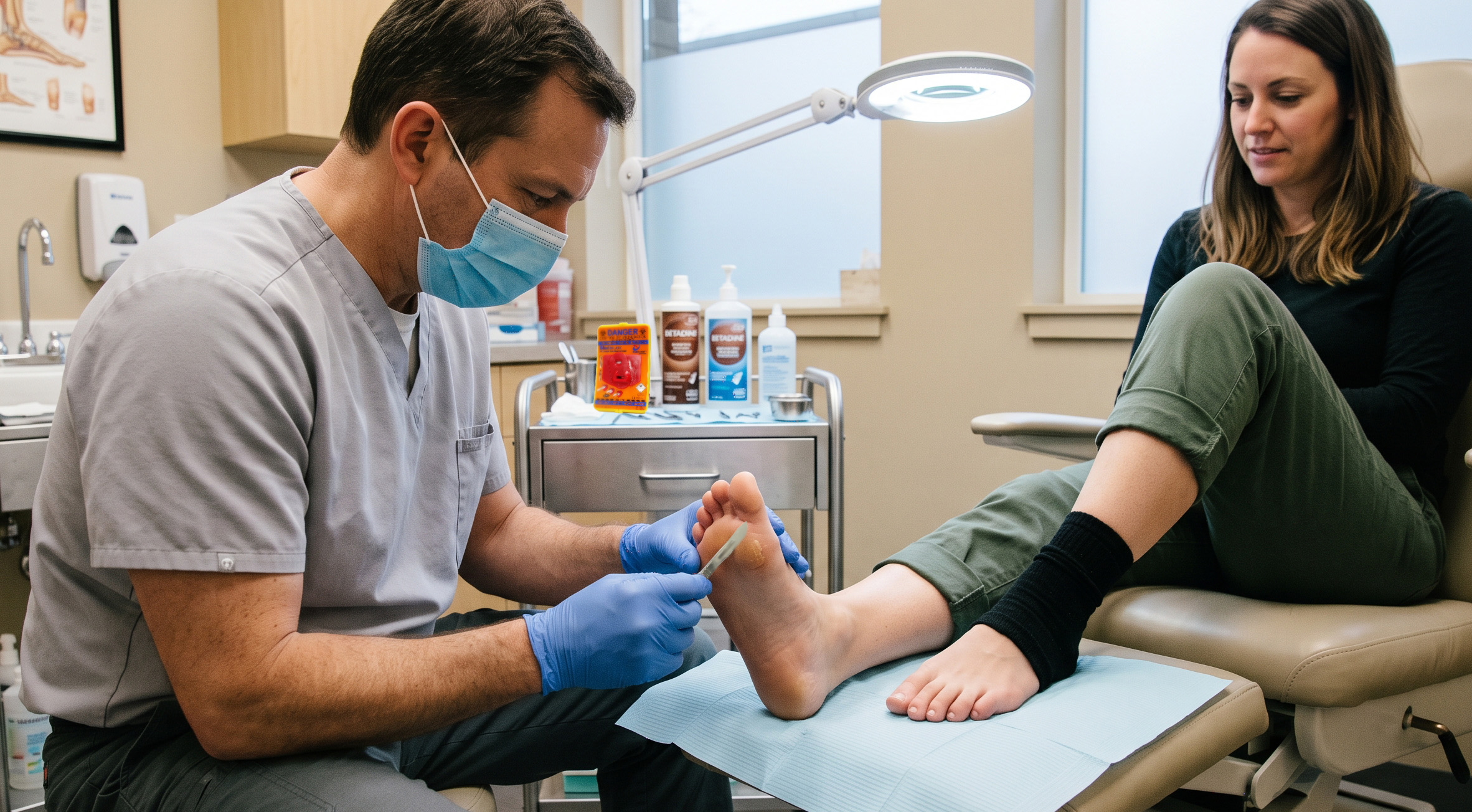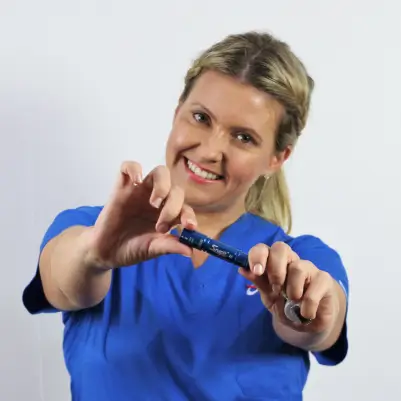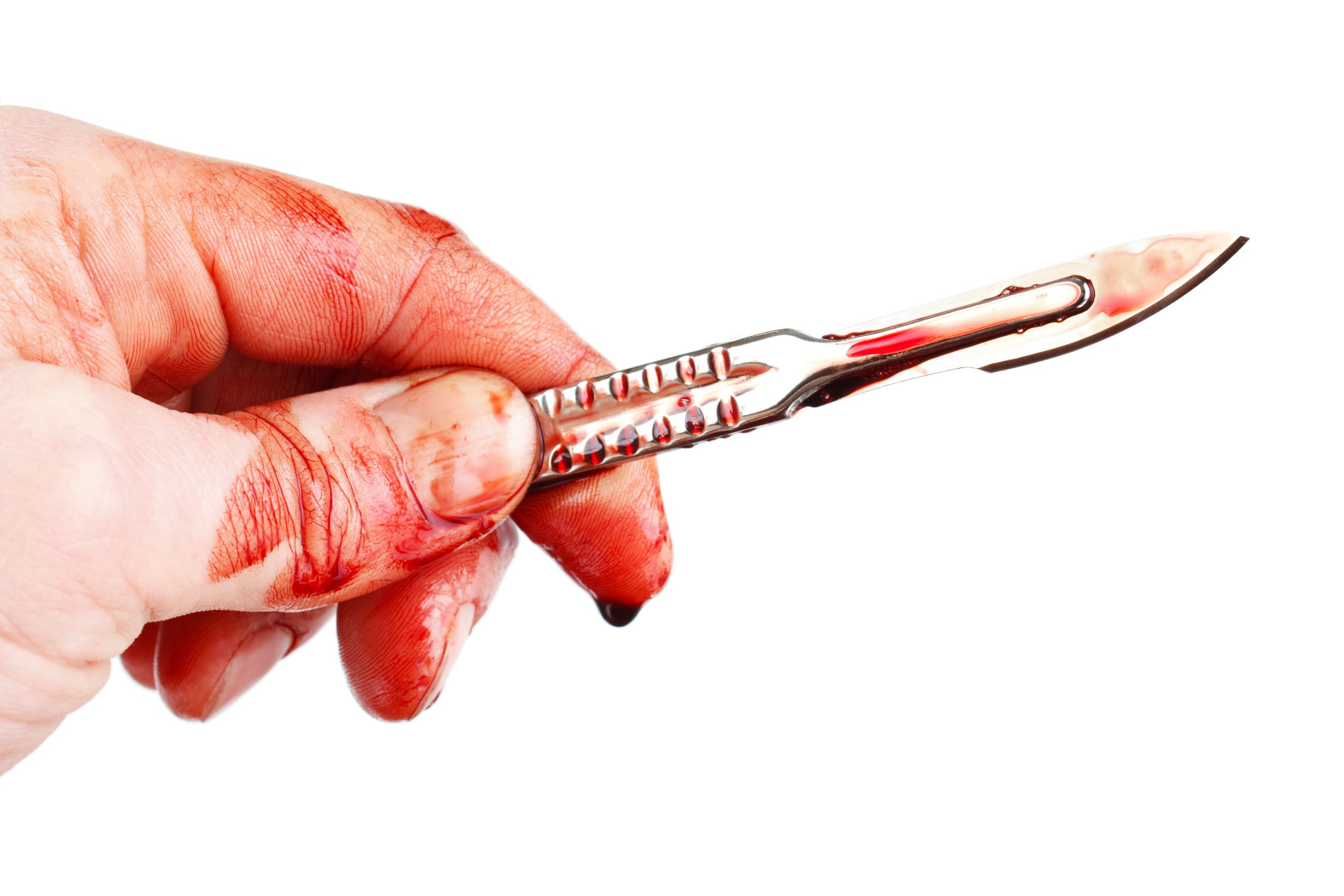
A single slipped scalpel can change a healthcare worker’s life in a fraction of a second. Sharps injuries remain one of the most dangerous—and underestimated—hazards in modern medicine, threatening staff during routine procedures and complex surgeries alike.
The Incidence of Sharps Injuries
In Europe, approximately 1 million sharps injuries are estimated to occur annually to healthcare workers.18.5 thousand occur in Australia, and in the United States, 385 thousand. In the United Kingdom, 100 thousand sharps injuries occur, making it the second highest occupational risk for healthcare workers.

Consequences of Sharps Cuts
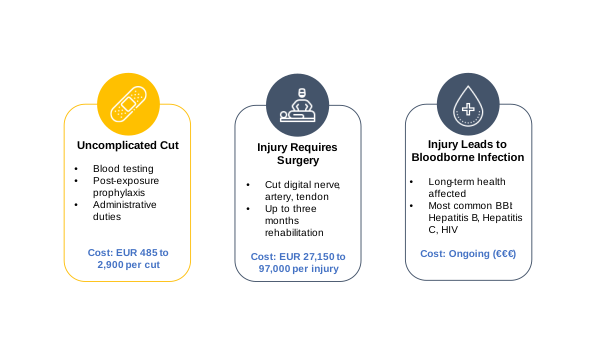
The consequences of sharp injuries can be severe. Physically, sharp injuries can cause:
- deep wounds, such as severed digital nerve and/or tendon
- increase the risk of blood-borne infection, such as HBV, HCV, or even HIV
- can lead to long-term health problems.
Emotionally, sharps injuries can cause significant distress and anxiety, leading to long-term psychological effects such as post-traumatic stress disorder (PTSD).
Financially, sharp injuries can result in increased insurance premiums, lawsuits, and decreased productivity due to time off work.
Addressing the Problem
In the US, the American College of Surgeons (ACS) updated its Statement on Needlestick and Sharps Safety, providing globally leading guidance to protect operating theatre staff, students, and downstream workers from occupational hazards.
5 Key Updates:
- Hierarchy of Controls: Prioritizes systemic controls over individual actions to reduce exposure risks.
- Passive Safety Devices: Prefers passive (automatic) over active (manual) safety-engineered devices to minimize human error.
- Downstream Protection: Requires immediate sharp containment after use to safeguard cleanup and waste-handling personnel.
- Broader Injury Definition: Explicitly covers suture needles, hollow-bore needles, scalpels, glass ampoules, and other skin-penetrating objects.
- Student Inclusion: Formally extends all safety guidelines to medical students and trainees.
We will focus primarily on the first two updates, as they are most critical for operating theatre staff.
The Hierarchy of Controls
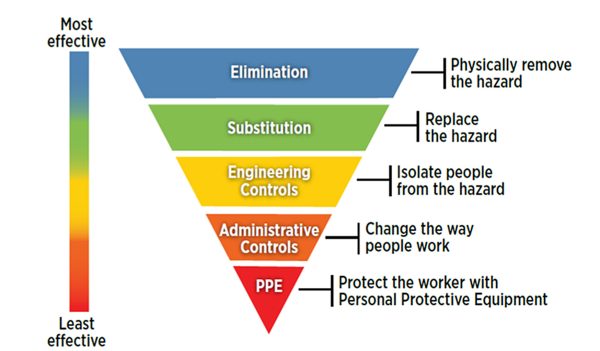
The Hierarchy of Controls (HoC) ranks control strategies from most effective to least effective: Elimination, Substitution, Engineering Controls, Administrative Controls, and Personal Protective Equipment (PPE). While comprehensive safety protocols combine multiple tiers, higher-level controls must always take precedence.
| Control Level | Strategy | Surgical Application & Efficacy |
| 1. Elimination | Remove hazard | Not Feasible: Sharp scalpels remain essential for surgical procedures. |
| 2. Substitution | Replace hazard | Not Feasible: Sharp scalpels remain essential for surgical procedures. |
| 3. Engineering Controls | Isolate hazard via design | Primary Defense: Safety-engineered devices. The American College of Surgeons (ACS) strongly recommends passive (automatically activated) over active (manually activated) devices. |
| 4. Administrative Controls | Change work practices | Secondary Support: Policies, safety education, hands-free passing techniques in the operating theatre, Hepatitis B vaccination mandates, and the standardized use of single-handed scalpel blade removers. |
| 5. PPE | Protect individual worker | Last Line of Defense: Double-gloving. Although widely recognized, PPE is inherently the least effective control and must supplement—never replace—higher-level design controls. |
Passive Safety-Engineered Devices are Preferred
The ACS updates stress that not all safety-engineered devices offer the same level of protection.
- The ACS recommends using passive (automatically activated) safety devices in preference to active (manually activated) devices.
- Because active devices are manually activated by the user, they are highly prone to human error.
- Active safety-engineered devices are 70 times more likely to cause an injury compared to their passive counterparts.
Key Takeaway
To effectively minimize scalpel injuries, hospitals and facilities should prioritize passive engineering controls alongside hands-free passing techniques, relying on PPE strictly as a secondary safeguard.
References
- Hambridge K, Burt W, Bettache G, Keshishian M, Walvin T & Cozma E (2024) ‘An exploration of sharps injuries within healthcare students at a UK university’ Journal of Infection Prevention.
- Using personal protective equipment (PPE) to control risks at work, Health and Safety Executive. https://www.hse.gov.uk/ppe/managing-risk-using-ppe.htm
- Tosini W, Ciotti C, Goyer F, et al. Needlestick Injury Rates According to Different Types of Safety‐Engineered Devices: Results of a French Multicenter Study. Infection control and Hospital epidemiology 2010;31(4):402-07.
- “The blunt truth about sharps safety”. http://www.repertoiremag.com/the-blunt-truth-about-sharps-safety.html.
- Watt, A. M., Patkin, M., Sinnott, M. J., Black, R. J., & Maddern, G. J. (2010). Scalpel safety in the operative setting: a systematic review. Surgery, 147(1), 98-106.