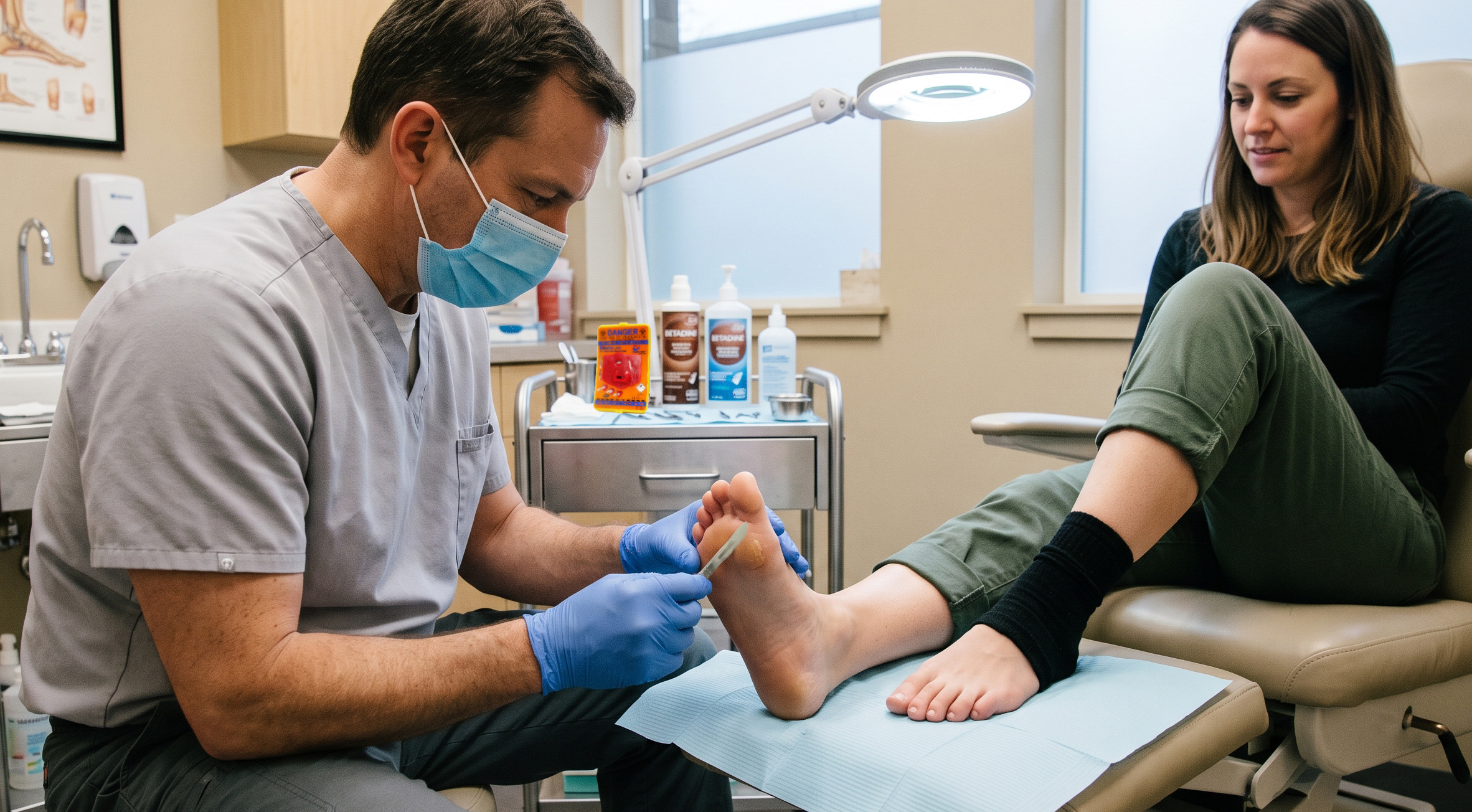
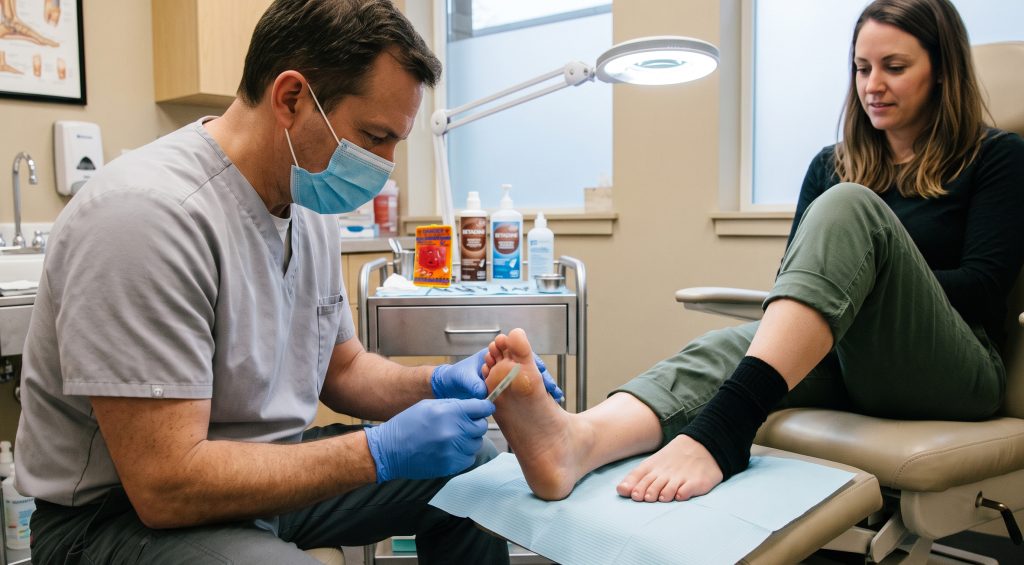
Sharps injuries, such as scalpel cuts, are a pervasive but often overlooked hazard in healthcare. In podiatry, sharps injuries can occur during routine procedures, such as wound care or nail surgery, or during more complex surgical procedures.
The Problem of Sharps Injuries in Podiatry
In the United States, 385 thousand sharps injuries are estimated to occur annually to healthcare workers; 18.5 thousand in Australia, and 1 Million in Europe. In the United Kingdom, 100 thousand sharps injuries occur, making it the second highest occupational risk for healthcare workers.
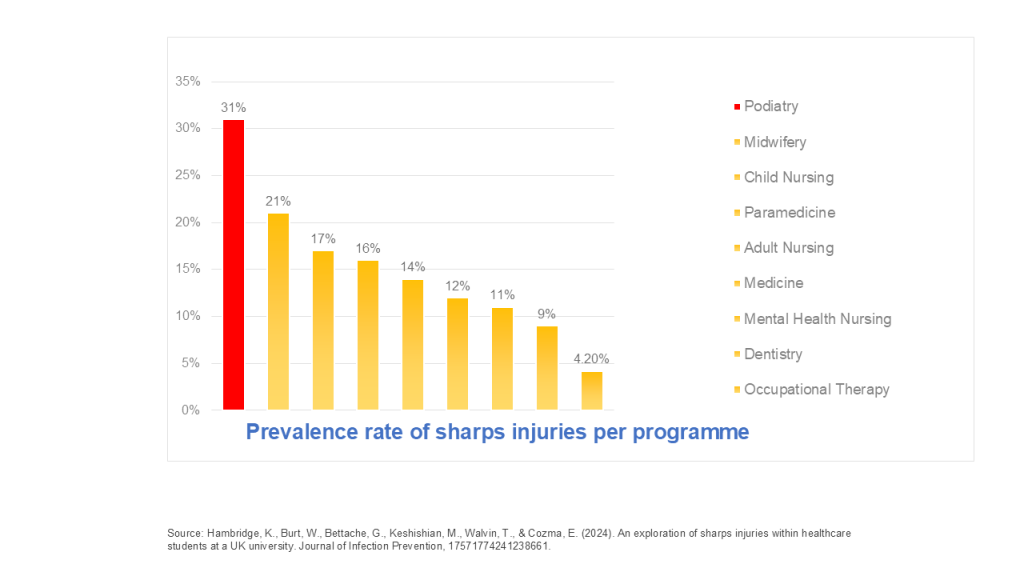
Of greater relevance to podiatrists, a 2024 study by Dr Kevin Hambridge, of pre-registered students in the UK, showed podiatry students suffered the most sharps injuries, with a rate of 31%.
Consequences of Sharps Cuts
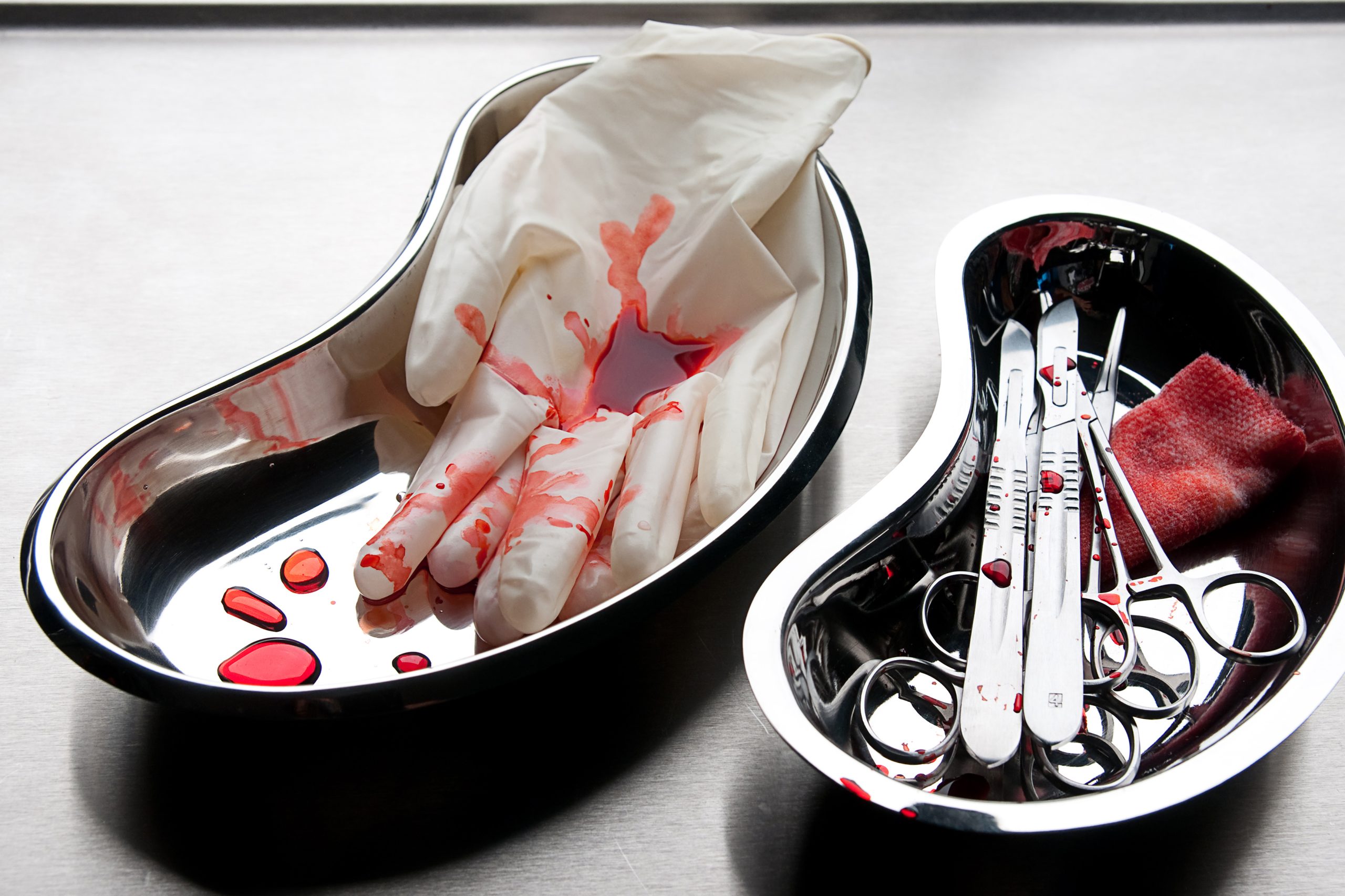
The consequences of sharp injuries in podiatry can be severe (2 & 3). Physically, sharp injuries can cause:
-
- deep wounds, such as severed digital nerve and/or tendon
- increase the risk of blood-borne infection, such as HBV, HCV, or even HIV
- can lead to long-term health problems.
Emotionally, sharps injuries can cause significant distress and anxiety, leading to long-term psychological effects such as post-traumatic stress disorder (PTSD).
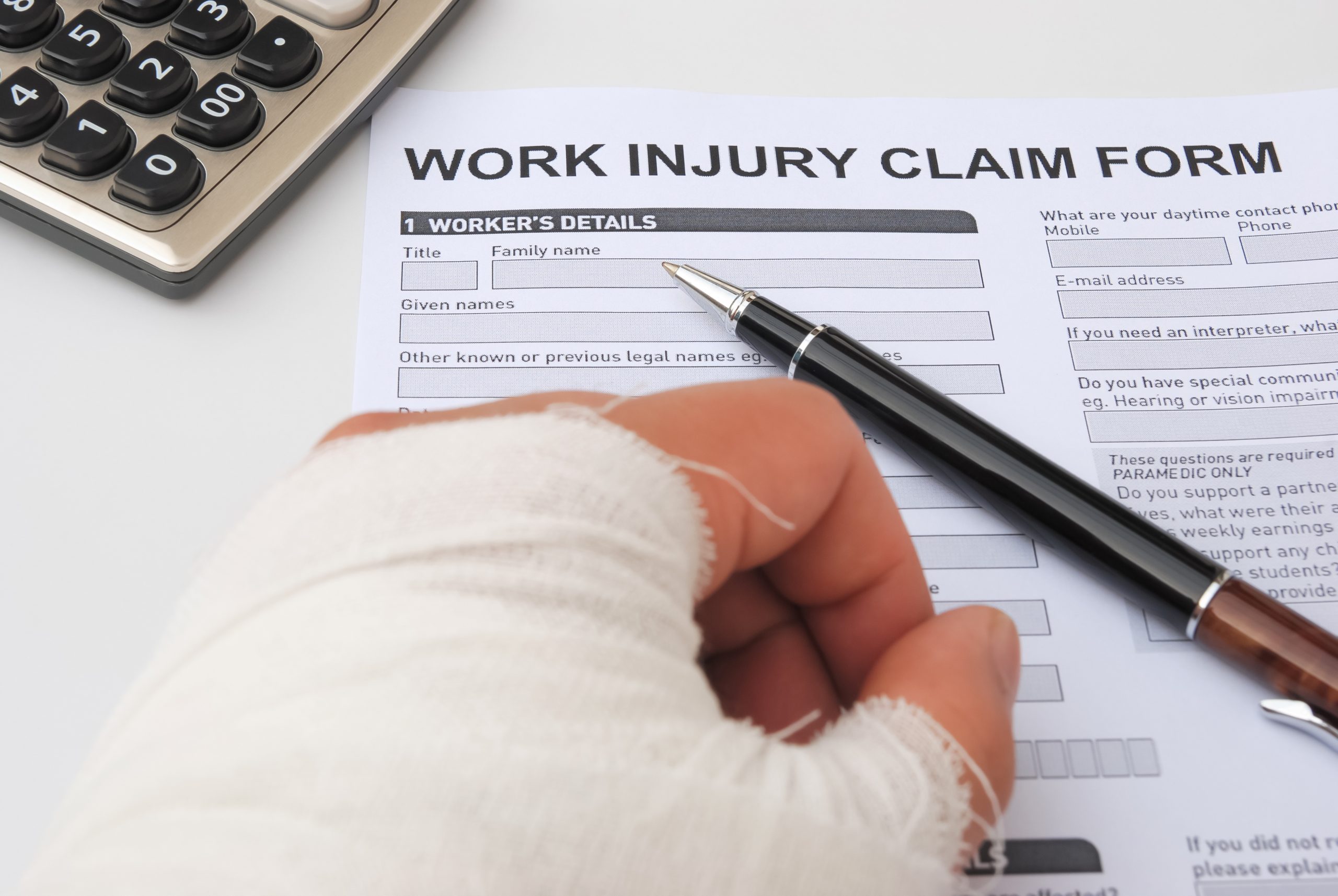
Financially, sharp injuries can result in increased insurance premiums, lawsuits, and decreased productivity due to time off work.
Addressing the Problem
Efforts are underway to address this critical issue. The Health and Safety Executive (HSE) provides clear procedures and guidelines for the removal, containment, and disposal of scalpel blades from handles (4). These include:
- Do not remove scalpel blades by hand.
- Do not use instruments like artery forceps for blade removal.
- Avoid two-handed resheathing actions.
- Always remove and contain scalpel blades using a single-handed scalpel blade remover.
Hierarchy of Controls
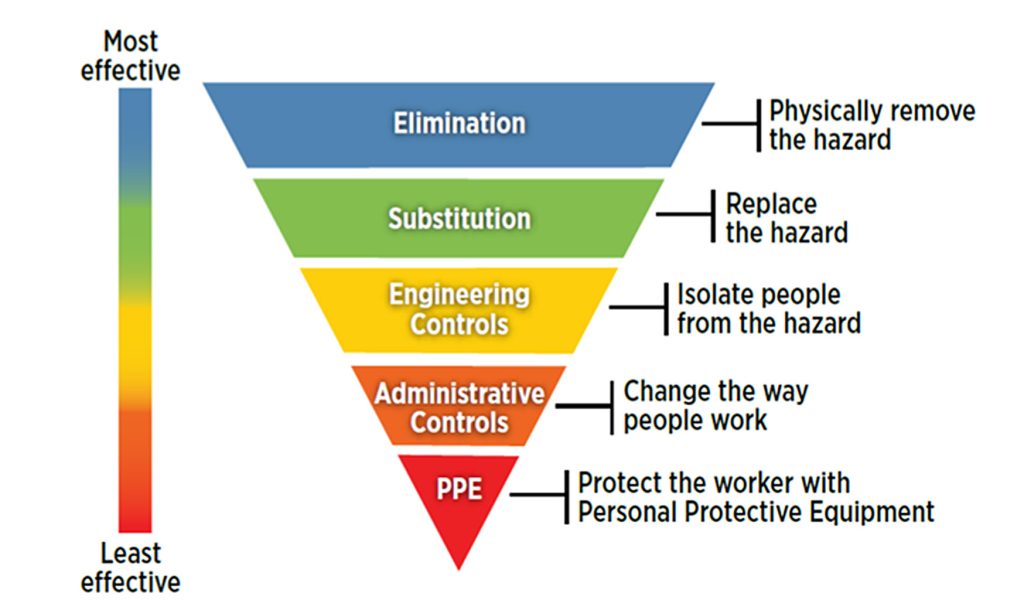
An effective tool to manage the hazards of sharps injuries in podiatry is the Hierarchy of Controls (HoC).
The HoC is divided into 5 levels (see pyramid diagram) and level 3, the Engineering Controls are the most effective, practical level. This level further protects people from hazards, by creating a change to the workers environment.
Examples of engineering controls include safety-engineered devices such as single-handed scalpel blade removers and sharps disposal systems with the below key features:
- Passive devices:The safety feature should be passive (automatic) as opposed to the older active (manual) devices. Active devices are 70 times more likely to cause a sharps injury (5).
- Immediate Containment: They should also immediately contain the sharp (to protect downstream staff) (6 & 7).
- Safe sharps disposal practices: Certified sharps containers should be located conveniently and disposed of properly when full.
- Follow established legislation/standards:Strict adherence to established international safety protocols for handling sharps instruments is crucial.
Using Safety-Engineered Devices: Single-Handed Scalpel Blade Removers
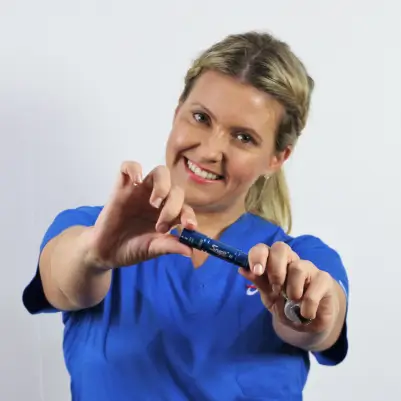
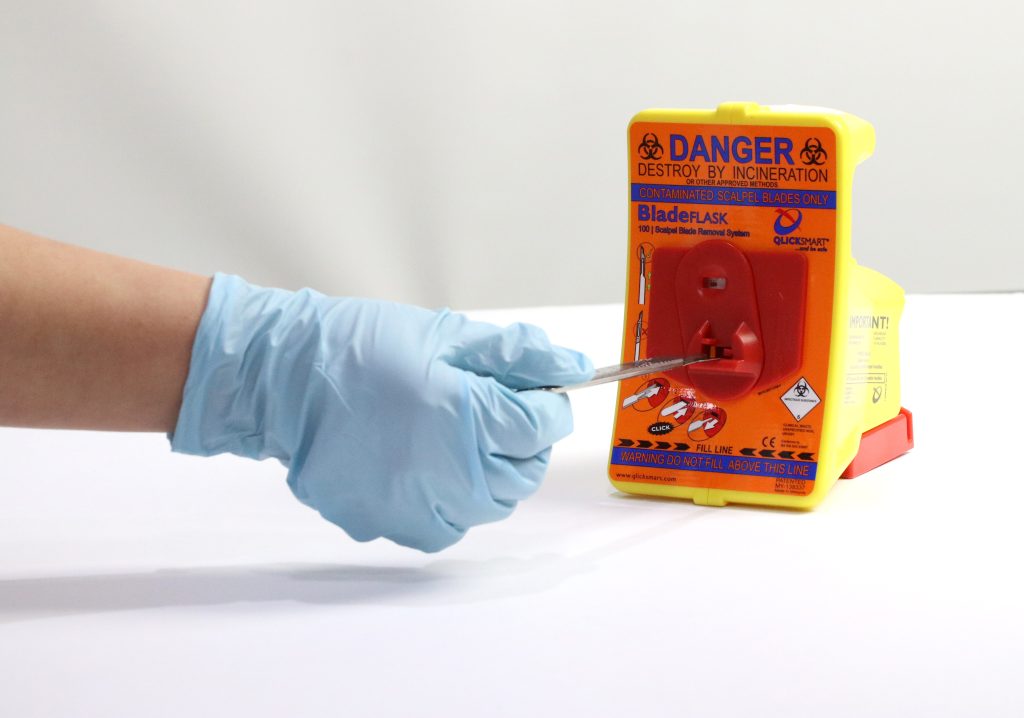
Qlicksmart’s range of single-handed scalpel blade removers such as the Qlicksmart BladeFLASK Scalpel Blade Remover, helps facilities meet international guidelines, as well as keep podiatrists safe from injuries.
Using the Qlicksmart BladeFLASK, up to 50% of scalpel cuts in podiatry clinics can be prevented. The Qlicksmart BladeFLASK:
- Removes up to 100 used scalpel blades
- Automatic safety mechanism removes and contains your scalpel blades using only one hand
- Certified and medically approved sharps container
- Can be attached to a wall, bench, or trolley with the reusable Mounting Bracket
- Dispose as medical waste, following your clinic’s usual procedures.
For more information regarding sharps safety for Podiatry, please contact us at hello@qlicksmart.com.
References
- Hambridge K, Burt W, Bettache G, Keshishian M, Walvin T & Cozma E (2024) ‘An exploration of sharps injuries within healthcare students at a UK university’ Journal of Infection Prevention.
- Hambridge, K. (2022). The psychological impact of sharps injuries sustained by medical students. British Journal of Hospital Medicine, 83(1), 1-7.
- Hambridge, K., Endacott, R., & Nichols, A. (2021). Investigating the incidence and type of sharps injuries within the nursing student population in the UK. British Journal of Nursing, 30(17), 998-1006.
- Using personal protective equipment (PPE) to control risks at work, Health and Safety Executive. https://www.hse.gov.uk/ppe/managing-risk-using-ppe.htm
- Tosini W, Ciotti C, Goyer F, et al. Needlestick Injury Rates According to Different Types of Safety‐Engineered Devices: Results of a French Multicenter Study. Infection control and Hospital epidemiology 2010;31(4):402-07.
- “The blunt truth about sharps safety”. http://www.repertoiremag.com/the-blunt-truth-about-sharps-safety.html.
- Watt, A. M., Patkin, M., Sinnott, M. J., Black, R. J., & Maddern, G. J. (2010). Scalpel safety in the operative setting: a systematic review. Surgery, 147(1), 98-106.